fast increase in data storage is relative and also heavily dependent on traffic or rather number of transactions.
1 Like
yes correct. this is so that you can query the main blockchain network for any data. i would say having more persistent_peers would be better.
for a sentry node to have that many peers doesn’t really matter or affect the security of your validator node if thats your question.
i will be updating the sentry nodes tutorial in the gitbook for a more detailed explanation
@Bernando i have added a proposal to edit or add your own validator logo into the pipeline. for now we do not support this. it requires some modules to be added to the chain code for this to happen
For sure! I do not mind at all.
by the way, other than altering the comms rate, which we will effect another round of change soon, what suggestions do you guys have in helping our entire network become a more decentralized one and to also help your validators gain more delegators?
in economics, i would say it is a perfect competition, but we should move away from this to prevent it from what some of you mentioned, it eventually becoming a pricing war. i would like to hear your thoughts on this here, in the telegram group or in our all hands meeting.
1 Like
Like i said before, when a chain is fairly new, there will be pricing wars because none of the validators have any reputation or credibility YET.
As a chain matures, it won’t be about who have the lowest or highest commission anymore but the validator who have the most stable server / branding.
Look at other chain’s validators, the commissions range gap is so huge and those with extremely high commission rates are also one of the top validators.
Why? Reputation and credibility.
Give it some time, we honestly don’t need to bother about the current pricing wars. It is very normal and it lets the market decides where they want to allocate their money without us influencing their decision.
I strongly believe we should not influence where people want to put their money. It is all about uptime and branding.
Think luxury products - a simple concept. People go after them even at high premium when they can go for a cheap product. It is all about branding and credibility.
Time will show us which validator is the best.
Also when Centralized Exchanges & Staking Companies start to onboard as a validator in future, you wouldn’t want to pull and influence people away too right? Let the market decide.
Centralized Exchanges ( Binance, Coinbase, Kraken & more )
Staking Companies (Stake.fish, Everstake, B-Harvest & more)
I don’t know about you guys but i’m looking at it from a business point of view.
1 Like
Few ideas I have in mind:
-
Performance metrics Visibility
I think making node performance metrics visible to delegators and/or possibly having a FX approved badge for validators if they meet certain criteria (ie, fast servers, sentry node setup, backup and monitoring server etc) will sure help gain delegators trust. The badge will also motivate validators to offer a high quality service. -
Message or Notification to Company Node Delegators
I have noticed that a lot of big token holders don’t follow the forums or Twitter. Not sure what would be the ideal way to reach to them. May be a wallet notification, which advises them to redelegate to public validators.
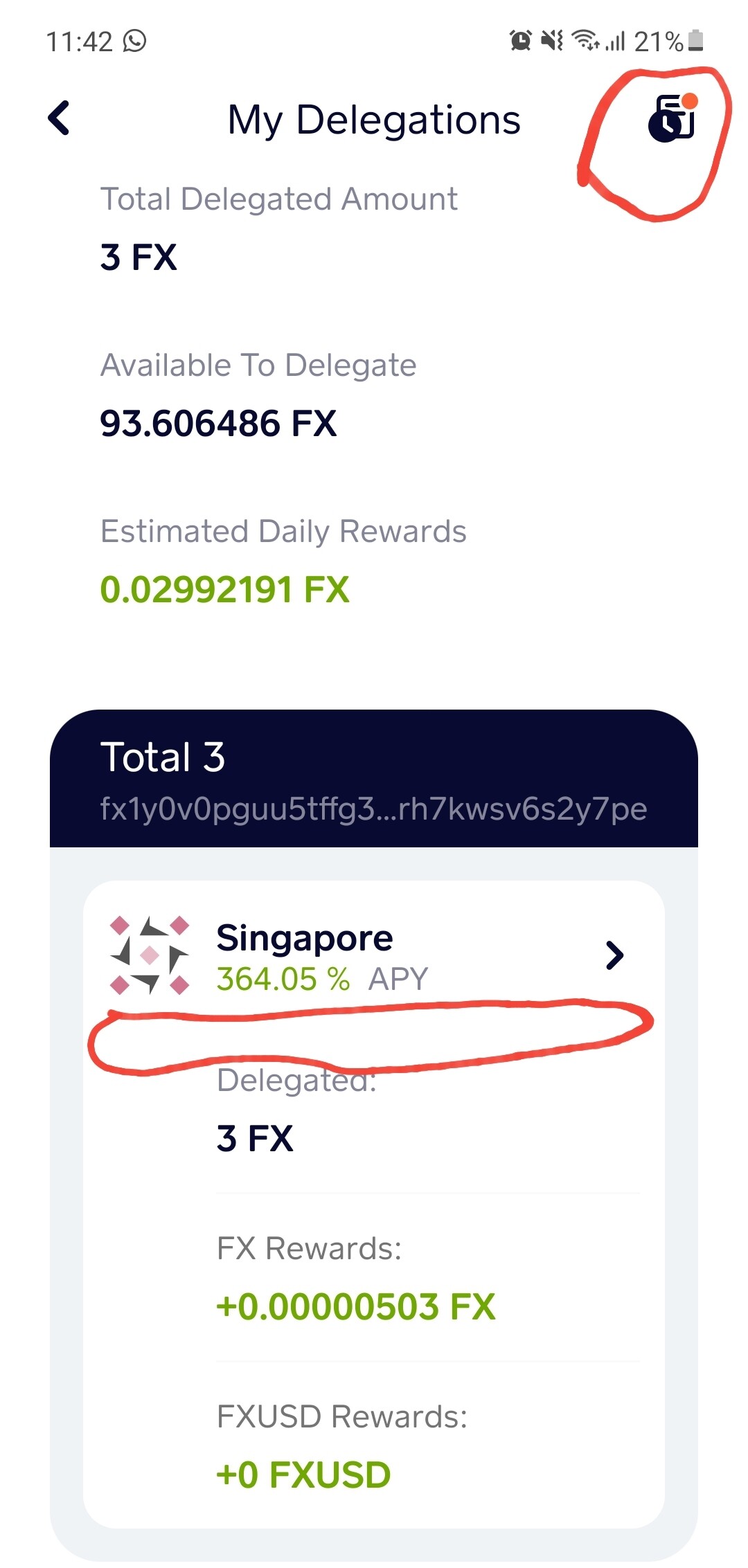
Notification or message in the highlighted sections would definitely get their attention.
- Shutting Down Company Validator
This should be the last option if other options don’t yield any results. With ample notice, team could take down their nodes, one at a time.
1 Like
Yes i think i made a separate thread before, for delegators to be able to see the performance of each validator - I like #1.
And the idea of an approved badge ( the same way Twitter do for Verified Users ) is smart too. The criteria for getting a badge can be discussed further. Basically, a badge works like a reassurance kind of thing.
Afterall, the team has to know that people won’t just redelegate funds to an unknown validator just because they have zero/low commission.
Take real life for example; would you guys (the team & community) transfer your whole bank savings account to a new unknown bank with no reputation at all? Obviously not, it is all about common sense at this point.
Only time will tell who can maintain their servers.
I really like the idea of approved/verified badge for public validators. Company hosted validator can have their own badge. The criteria can always be discussed internally or with the community.
I support public validator 100% but there has to be measures in place since this is money we are talking about.
2 Likes
Good ideas. The key here is not to pick the best option and everyone delegate to 1 or only couple validators. For mitigating risk, a healthy normal distribution of tokens is necessary.
The top 30% validators will always have the most tokens delegated, but even the last 30% should atleast be holding 20% of the total staked amount.
2 Likes
Smartest thing is to distribute your risk. Even if someone offers the best service possible, one should never put all eggs in one basket.
Take the recent AWS outage for instance, who would have thought it could happen. Or the Facebook outage a while back. And just now, Kronos worldwide is impacted. Nothing is bullet proof, and risk distribution is the smartest strategy.
3 Likes
Agree on the points raised by @SCENE with regards to network security and track record.
Also agree on some of the points raised by @cop4200
There are 2 considerations we need to focus on here, namely network security & stability and validator’s ROI.
-
With regards to network security, track record of good actors who manage their validators well. As validators, we also need to remember, if the network is compromised, everyone loses. Coin price will drop, and sometimes it might not even recover, and then theres no point being a validator of this network.
-
The second consideration would be that yes, as a validator, your main concerns should be how to increase your ROI. And everyone wants to be profitable. But we also need to be mindful about the entire network’s security and stability.
With that I do have a couple of proposals.
- We can try our best to create conditions for validators
- Increase comms rate for internal validators (taking one out at the point might be a little drastic but we will take that into consideration too)
- Reduce the tax and fee ratio of the community pool
- Personalized account (avatar or NFT) as @Bernando has mentioned
- More transparent display of info on the browser…as @FrenchXCore requested
- maybe like a loyalty incentive plan like an entrusted long-term delegation reward i think something that @Telchar mentioned
- From the validator’s perspectives, public validators can boost their image by
- increasing self-delegation amount
- increasing the self-delegation parameters
- Improving node stability
- promote yourselves more
these are just some preliminary points. i would like to hear more feedback
1 Like
Could you please explain what you mean by suggestion #2 Increasing the self-delegation parameters?
you can raise your min-self delegation amount. so say the network’s minimum is currently 100FX. you could set yours to say 10,000FX. if your self-delegated amount falls below the new min-self delegation of 10,000FX, then the validator’s entire staking pool will unbond.
it is just one of the parameters if you are a validator to show that you have a higher explicitly set amount of min-self delegation.
but yes i’d love to hear from everyone
2 Likes
I like the idea. But for it to have any impact, it needs be visible when we scroll through list of validators, rather then having to open the details section.
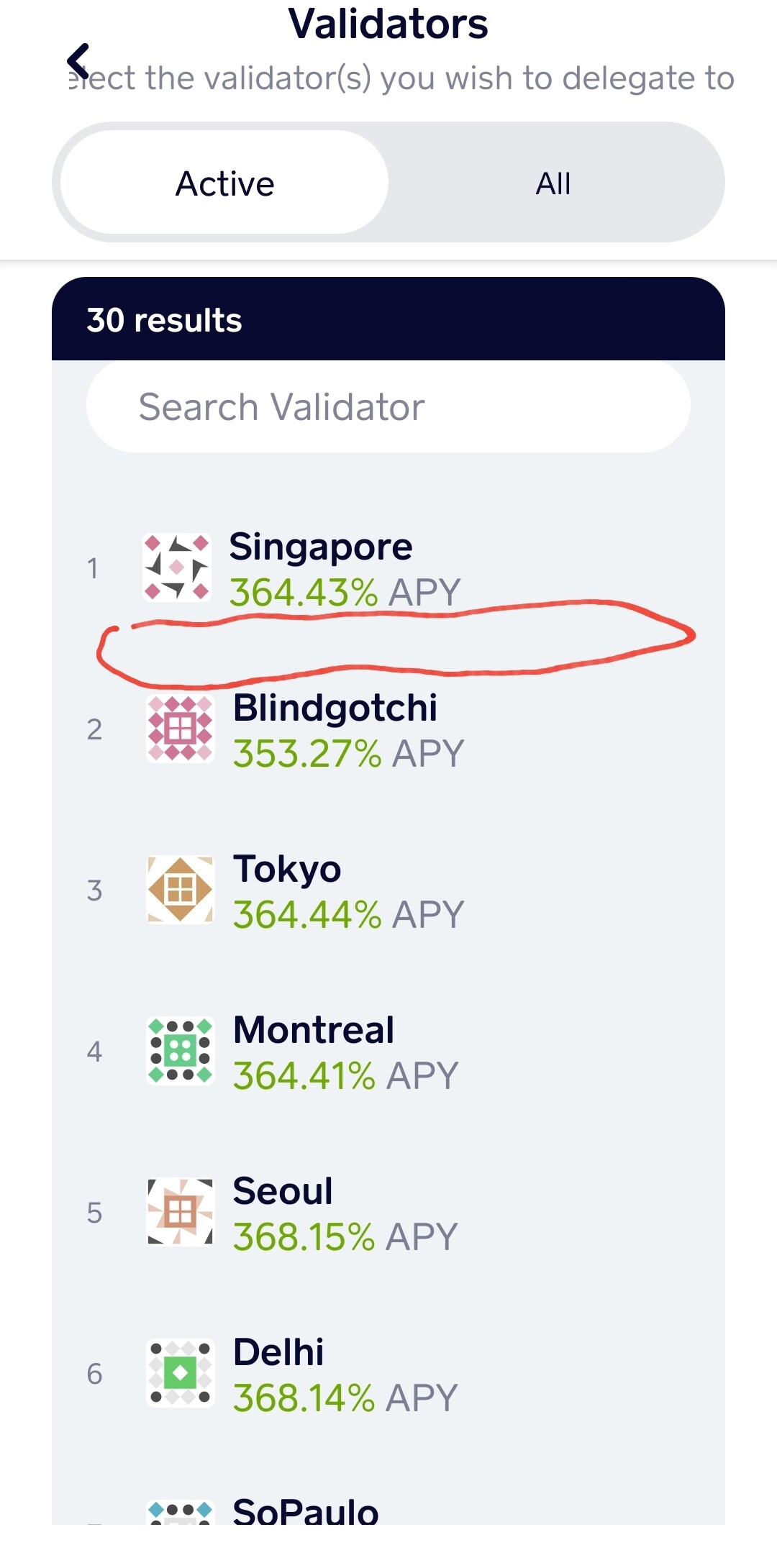
If the highlighted section could show uptime and min self delegation amount, it will have a bigger impact!
3 Likes
Also, this may be a little far fetched but if validators are allowed to have an insurance pool for their delegators, that could really boost confidence!
So if validator A has 100K delegated and they have a 10K insurance pool. Validator gets penalized for being down and delegators loose 150 FX rewards. The 150 FX gets deducted from the insurance pool and delegators are reimbursed !
2 Likes
This will also push operators to perform at their best. And if a validator has atleast 5% of staked amount in the insurance pool, delegators are fully protected.
1 Like
I agree with SCENE with his first response.
We are fairly new and I dont think we need to jump guns to make this super fast by some or the other means.
I Also agree points on improving the UI to show validators metrics and things like verified badge.
@Richard what do you mean by “Reduce the tax and fee ratio of the community pool” ?
1 Like
this is a great idea.
Great ideas in this thread.
I tend to say, we need it all.
As a delegator, for me a couple of things are important;
-
Trust.
I like to make my delegation almost a little personal. So therefor chosen to delegate to validators i “know” for some time.
Trust comes from both sides so in this i completely agree with Telchar. -
Performance and security
In this there is to little insight, other then some messages from validator on Twitter.
I would like to see uptime, downtime, server specs etc. on the explorer and the validator overview page.
Imho almost a must.
For me these are most important.
Much more then a commission rate.
And i like the idea of the validator badge (gives trust) and the insurance pool.
And 1 question.
When validator is slashed or jailed or down, or whatever, my initial delegated coins are save right?
And i can, at any time, access my delegated coins?
That there are no rewards build up in that downtime is clear, thats my own calculated risk.
Sorry for the question, i was at the all hands zoom meeting, but my boss bothered me all the time… so could not follow everything that was told.
And thougt there were questions about that?
At the meeting, it was said that if a validator gets jailed, delegators will also not be able to unbond until after 21 days. That’s why i proposed being able to see performance and security first while slowly gaining trust.
The insurance pool from cop4200 is a really smart idea.
For example, KuCoin lending - 15% of all lender’s profits will be taken and be put into an insurance pool and that was the condition to be able to lend out. It was a must-have criteria from the start.
If Richard and the team can somehow make our DPoS into a DPoS with Insurance, i think we would be the freaking first in the whole space.
Can you imagine people’s reaction when they hear of staking with insurance? Especially whales and smart investors? I don’t know if this is even feasible at all but if you guys are able to pull it off, it would be a blast and also a FIRST IN THE WORLD.
That way, the floor of the commissions can be slightly higher but that is okay because it comes with a additional strong layer of security.
Example:
5% Commission broken down into = 4% commission + 1% insurance pool.
It is a win-win-win scenario.
Investors win - people will feel safer to ape in bigtime with insurance
Validators win - pretty decent starting floor for commissions
Network wins - high security and lesser circulating supply
I don’t see how this can go wrong. And i can already sort of picture people’s reaction if there is DPoS with insurance backing.
The insurance pool for each validator will be stacking up constantly overtime and should be visible at the explorer so each delegator can see how much insurance fund there is in each validator. Also that means there will be lesser circulating supply in the market.
Also to encourage people to shift from company hosted validators, company-hosted validator can opt out of the insurance fund and just have a standardized commission rate that is high enough for people to shift over.
We should have a “Running Days” column too because people tend to delegate to the validator that has their skin dip the longest - basically a veteran in the space which is all of our early public validators.
4 Likes